
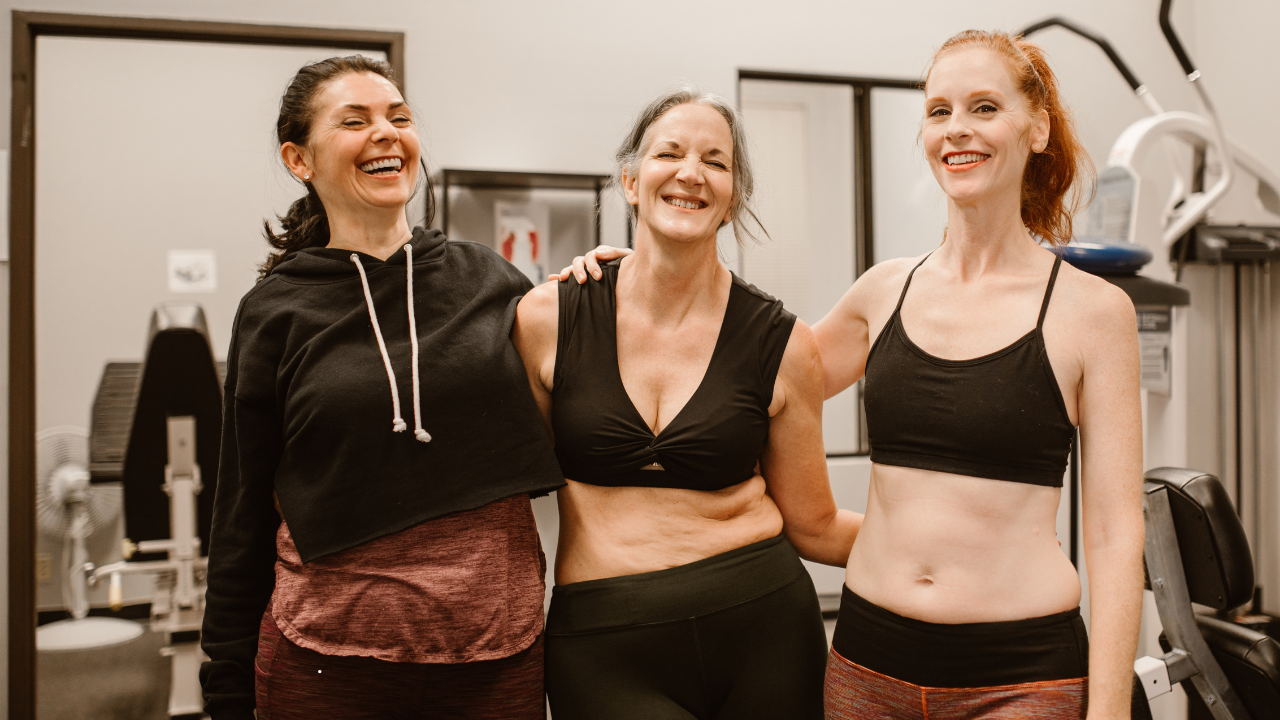
Strength training in menopause is the foundation for long-term health, energy and independence.
Aging strong in menopause does not happen by accident.
Aging does not automatically mean decline.
But the way you train in midlife will determine how you experience the decades ahead.
We’ve been conditioned to believe that slowing down is inevitable. That stiffness, weight gain and fatigue are simply part of getting older. That we should accept feeling weaker or less capable.
That narrative is outdated.
Midlife is not the beginning of deterioration.
It is a physiological transition that requires a smarter approach.
Why Menopause Changes the Aging Process
During perimenopause and post-menopause, estrogen declines. This affects:
- Muscle protein synthesis
- Bone density
- Recovery capacity
- Insulin sensitivity
- Stress tolerance
Without intentional strength training, muscle mass gradually declines. Bone density reduces. Metabolism becomes less flexible.
But the opposite is also true.
When you apply menopause-specific strength training principles, your body adapts.
You can build muscle.
You can improve bone health.
You can increase metabolic resilience.
You can feel strong and capable.
Strength Is the Foundation of Healthy Aging
Cardio has benefits.
Mobility matters.
But strength training in menopause is the anchor.
Muscle is not cosmetic. It is protective.
It supports your joints.
It reinforces bone density.
It improves glucose regulation.
It enhances posture and balance.
It reduces injury risk.
It increases independence later in life.
When you lift heavy with proper progression, you are not just changing how you look.
You are influencing how you age.
The Metabolic Advantage of Muscle in Midlife
Muscle is not just about aesthetics. It is metabolically active tissue.
As estrogen declines in menopause, insulin sensitivity can shift. Blood sugar regulation becomes more fragile. Fat storage patterns change.
Strength training helps counter this.
Building muscle improves glucose control, supports metabolic flexibility and reduces the risk of long-term cardiometabolic issues.
Aging strong in menopause means preserving the systems that protect you decades from now — not just focusing on short-term appearance.
What Aging Strong Actually Looks Like
It is not six days per week in the gym.
It is not chasing exhaustion.
It is not endless cardio.
A sustainable midlife strength plan typically includes:
- Two to three structured full-body strength sessions per week
- Progressive overload using challenging resistance
- Adequate protein intake to support muscle repair
- Planned recovery and sufficient sleep
- Adjustments based on stress and energy levels
It is strategic.
It is focused.
It is consistent.
It Is Never Too Late to Start
Women in their forties, fifties and sixties can make significant strength gains — even if they have never lifted weights before.
The body remains responsive at every stage of life.
What changes is the strategy.
If you are already training but not seeing the results you once did, it may not be effort that is missing. It may be menopause-specific programming.
If you have not yet read my guide on menopause strength training and why old plans stop working, start there. Understanding the shift is the first step toward aging strong.
Final Thoughts: Your Strongest Years Can Still Be Ahead
Aging strong is not about resisting time.
It is about building capacity.
When you prioritise strength training in menopause, you are investing in:
- Mobility
- Bone health
- Metabolic stability
- Confidence
- Longevity
You do not need to train harder.
You need to train intelligently for this stage of life.
If you are ready for structured, menopause-specific strength coaching designed for long-term results, I offer personalised online coaching for women who want clarity, strategy and sustainable strength.
Ruth x
Leave a Reply